
Workforce is one line in your cost. See all of it: power, labor, taxes and freight, compared with where you operate today.
Get a free relocation snapshotA new federal grant will fund a 70,000 square foot advanced manufacturing training center in Buncombe County, built to train more than 800 people a year. For a manufacturer worried about finding people, it is worth understanding what is coming.
Ask a manufacturer what worries them most about moving a plant, and the answer is rarely the building. It is the people.
Can I find machinists? CNC operators? Maintenance technicians who can keep automated lines running? Those are the right questions. They are also the questions Western North Carolina has been working hardest to answer.
This summer the region got a large new piece of that answer.
What Was Announced
On July 27, 2026, the U.S. Economic Development Administration announced more than $34M in federal funding for workforce development and long term recovery in Western North Carolina. Nearly $29M of it goes to Asheville-Buncombe Technical Community College to build the WNC Futures Factory.
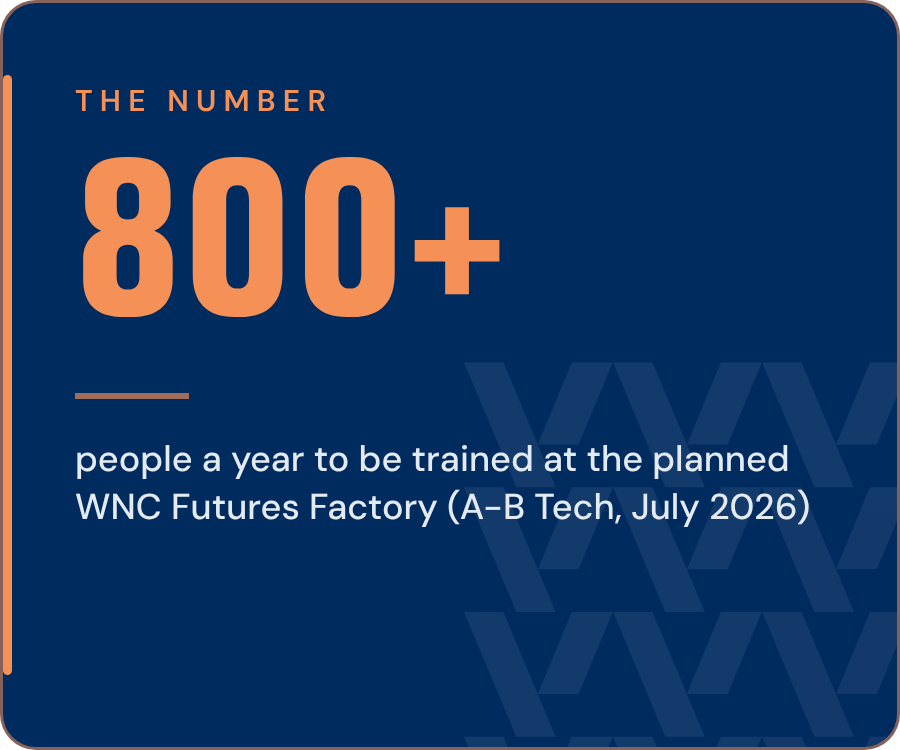
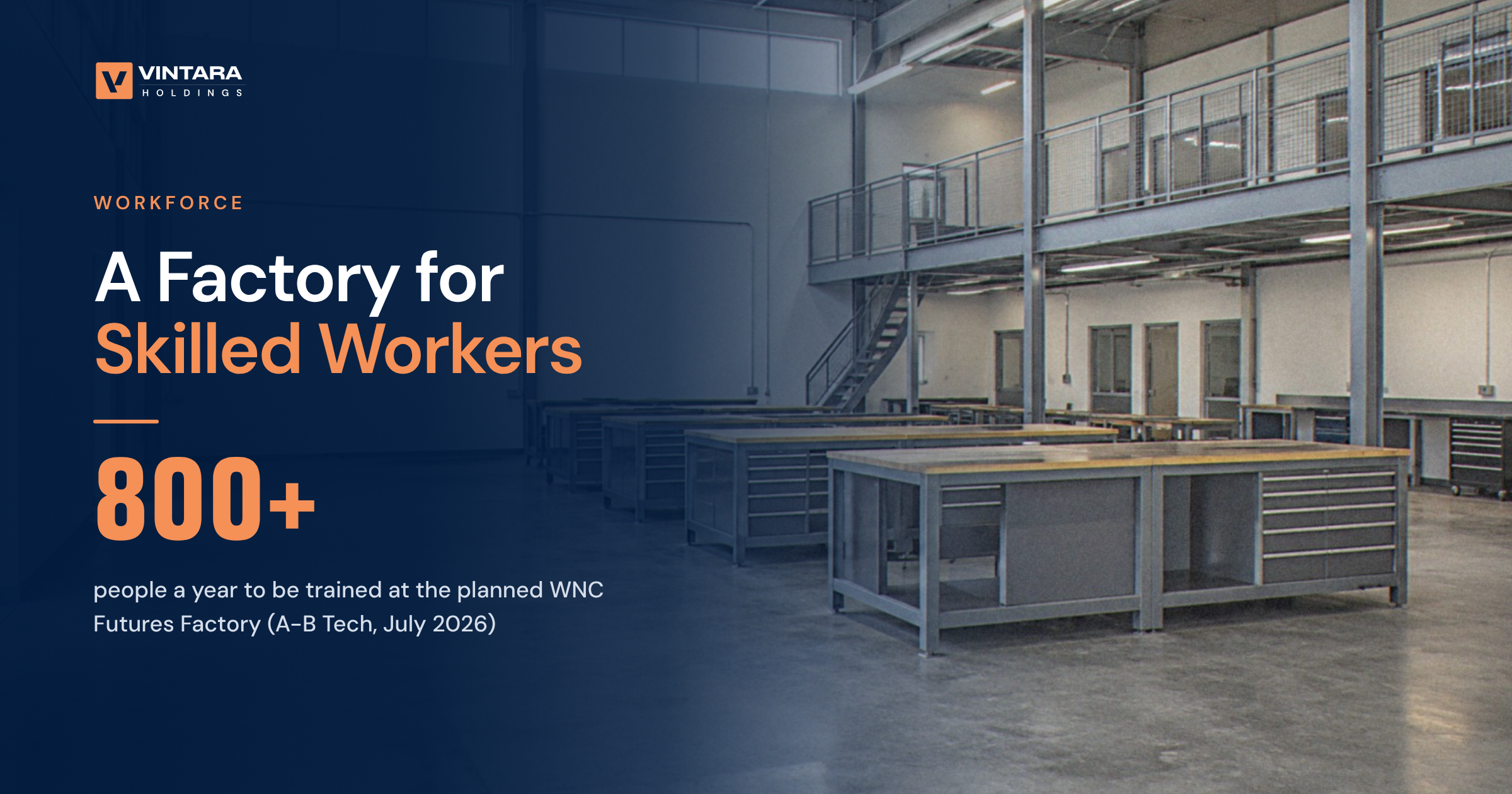
The plan is a 70,000 square foot advanced manufacturing training facility near the Pratt & Whitney plant in Buncombe County. A-B Tech expects it to train more than 800 people each year. It is designed to prepare workers for higher paying manufacturing jobs and to give small and midsize manufacturers access to research, development and training they could not build on their own.
It will not happen overnight. A-B Tech has said construction had not yet started when the grant was announced, and that the project is expected to take about two years once work begins. This is a pipeline for the next several years, not a staffing agency for next quarter.
Why It Matters to a Company Moving Here
The most common worry about Western North Carolina is that the labor pool is too small. The honest answer has two parts.
The first part is the specialty. This region has a long industrial history in mining and precision manufacturing, and the companies already here do equipment intensive, precision work. Cummins and Tageos are both part of the Vintara family, plus a bunch of smaller shops. A region builds a skilled workforce around the work that is actually done in it, and that work is here.
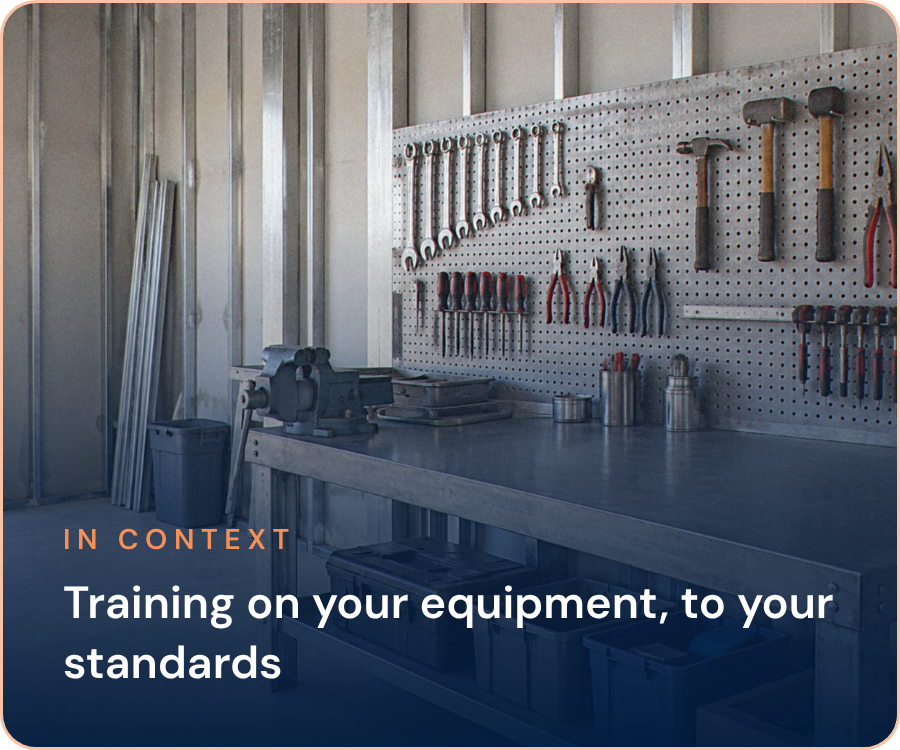
The second part is training. A-B Tech already delivers customized training for employers through NCEdge, North Carolina's customized training program for businesses. For a company that brings its own processes, that matters as much as the size of the labor pool. Workers can be trained on your equipment, to your standards, close to where they will work.
That kind of training is often the difference between a hard first year and a smooth one. A new plant rarely needs a crowd of generalists. It needs a core team that can run its equipment from the first production run, and a way to grow that team as volume grows. Customized training, delivered by a college that knows the local employers, is built for exactly that.
The Futures Factory adds scale to both. Dr. John D. Gossett, A-B Tech's president, said many manufacturers in the region are small and midsize firms without research and development departments of their own. A shared facility gives those firms a place to test, train and solve problems together.
Automation Raises the Value of Skilled People
There is a popular idea that automation will make the workforce question go away. It will not. It changes the question.
A modern line with robots, vision systems and automated material handling needs fewer people doing repetitive work. It needs more people who can program, maintain, troubleshoot and improve the equipment. Those are exactly the skills a training center like this is built to produce.
It also changes what a manufacturer should look for in a region. The question is less how many people live within a 30 minute drive, and more how many of them can be trained to run modern equipment, and how fast. A place that is building that capacity on purpose is a better bet than a larger place that is not.
Automation does not replace skilled people. It raises their value. A region that is investing in those skills is a region where an automated plant can actually be staffed.
What to Ask Before You Choose a Site
When a manufacturer compares locations, workforce usually gets one line in the spreadsheet: average wage. A few more questions tell you far more.
Which local colleges deliver customized training for employers, and how quickly can they start?
What new training capacity is coming in the next two to three years?
Which companies nearby already do work similar to yours, and are they expanding?
Can the building you are considering support the automation you plan to add?
The answers separate a location that looks cheap on paper from one where you can actually run a plant.
The Building Side of the Equation
Workforce and buildings are connected in a way that is easy to miss. A company that waits 18 to 36 months for a new building to go up is waiting that long to start hiring and training, too. An existing powered building moves both clocks forward. Leasing typically puts a manufacturer into production in 6 to 12 months, which means the hiring and training can start sooner as well.
Vintara owns and operates three industrial parks just outside Asheville, in Fletcher and Arden, with our own construction crew and 24/7 facilities staff. A tenant does not need to hire a facilities team to keep the building running, so the hiring can go where it counts, on the production floor.
Western North Carolina is building the pipeline of skilled people. The question for a manufacturer is how soon it wants to be producing where that pipeline leads.
Get a free relocation snapshot comparing your all-in cost where you operate today with Western North Carolina. To walk through it with Scott, book a time.
