
Lease ending soon? See your all-in cost in Western North Carolina.
Get a free relocation snapshotManufacturers and distributors absorbed more US industrial space in the third quarter than in any quarter since late 2022. Fewer new buildings are arriving to meet them. For a company with a lease ending soon, that changes when to start looking.
For two years, the national story in industrial real estate was too much new space and not enough demand. That story is changing faster than most lease plans.
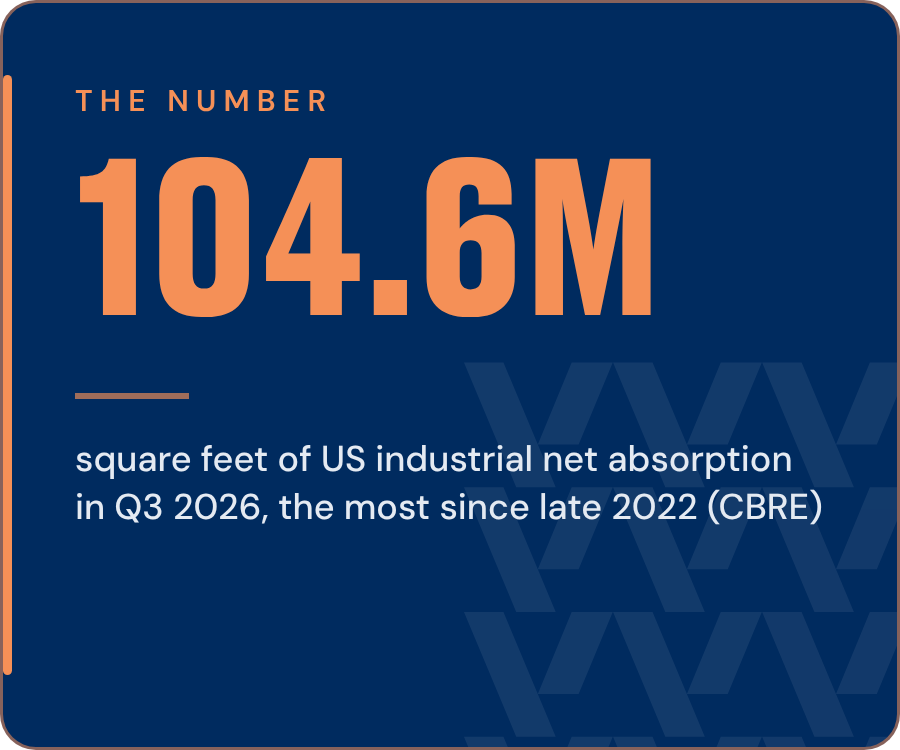
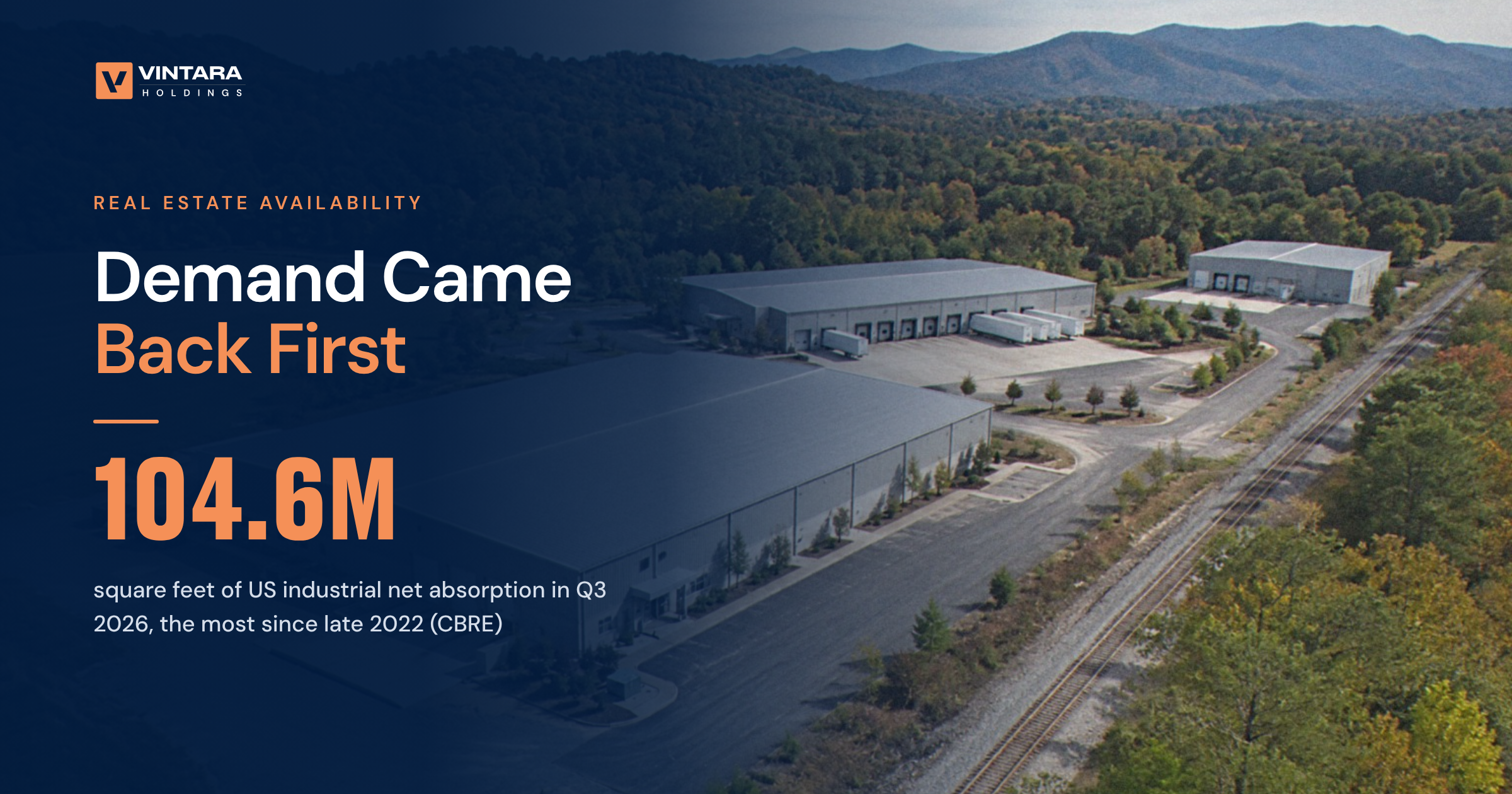
CBRE's Q3 2026 U.S. Industrial and Logistics Market Report counted 104.6 million square feet of net absorption in the third quarter, the highest quarterly total since the fourth quarter of 2022 and well above the 10 year quarterly average of 82.9 million. So far this year, absorption totals 237.8 million square feet, up from 97.7 million at this point last year.
Leasing rose 27.1% from a year earlier to 276.8 million square feet. The very largest leases nearly doubled, but smaller leases grew too, by an average of 9.7%. The national vacancy rate fell to 6.4%.
Fewer New Buildings Are Arriving
The other half of the picture is supply. New deliveries so far in 2026 totaled 182.7 million square feet, 17% below the same point last year. Space under construction has started to climb again, up 9.3% to 278 million square feet, but the most construction is concentrated in Dallas-Fort Worth, Phoenix and Houston.
A building that breaks ground this winter will not be ready for a tenant for a year or more. For a manufacturer that needs space in 2027, what is under construction today is not much help.
We wrote about the rent side of this shift in The Market Is Tightening Again. CBRE's numbers add the reason behind it: demand came back first, and new supply is arriving slower.
What CBRE Says About Existing Buildings
One line in CBRE's report is worth reading twice. Limited availability of new space in some markets, along with landlords offering more incentives to renew, is supporting existing facilities. Buildings completed between 2000 and 2019 absorbed 13.9 million square feet in the quarter.
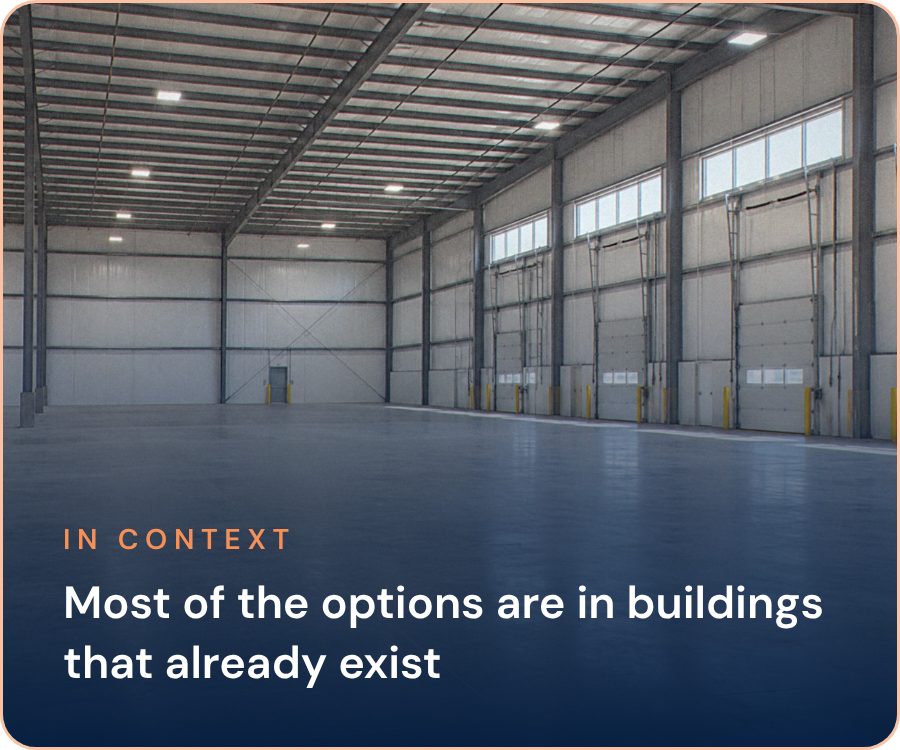
For a manufacturer, that points to two practical moves. If you like your building, the renewal conversation is worth having early, while landlords are still competing to keep tenants. If you need more space, or a better building, existing space is where most of the options are, and it is starting to move.
Why the Lease Clock Matters
A search that starts a year before the lease ends can be too short in a market like this, where demand is rising and fewer new buildings are arriving. Power, clear height, dock doors and rail access narrow the field fast, and the buildings that have them are the ones being leased first.
Timing also shapes the fit out. Electrical work, compressed air, process piping and racking take weeks to months, even in a building that already has the power at the door. A company that signs late squeezes that work into the last few months of its old lease, which is when overtime and mistakes get expensive.
If your lease ends in the next 24 months, the time to compare options is now: renewing in place, moving to an existing building or building new, each with its real timeline and its all-in cost, not just its rent.
What to Ask Before You Renew
Whether you plan to stay or move, the same questions frame the decision:
When does the lease end, and how long would a move and fit out take from today?
Does the building have the power, clear height and dock doors your next three years of production will need?
What is the all-in cost per square foot: rent plus power, labor, taxes, insurance and freight, not rent alone?
What would a renewal look like now, while landlords are still offering incentives to keep tenants?
If you outgrow the space, is there room to expand in the same park or market?
Rent is the number most companies know. It is rarely the number that decides whether a building works. Power and freight alone can move the total more than a dollar or two of rent, and they are set by the building and its location, not by the lease negotiation.
What That Looks Like in Western North Carolina
The Asheville market was tight before the national numbers turned. Industrial vacancy here is under 4%, compared with about 7% in Greenville-Spartanburg and about 9% in Charlotte. That makes existing, powered space valuable, and it is why we talk to companies early. A company planning a move here should not wait for the national numbers to tell it when to start.
Vintara owns and operates industrial parks just outside Asheville. Our buildings come with real power: 9MW at Quality Point today, expandable to 13MW, and 16,000 amps at SkyPoint Industrial Park. Rail serves AC Industrial Park and SkyPoint. We are 5 minutes from Asheville Regional Airport, directly on the I-26 corridor and within a day's drive of more than 50% of the US population.
Our own construction team controls cost and schedule on fit outs, and our 24/7 facilities staff take care of the building once you are in.
The national market turned this year. For a company planning a move, the most useful step is to put your current lease date next to your options and see which ones still fit.
Get your free relocation snapshot, which compares your all-in cost where you operate today with Western North Carolina. To walk through it with Scott, book a time.
