
Supplying a new program? See your all-in cost in Western North Carolina.
Get a free relocation snapshotThe largest economic development project in North Carolina history, by jobs, broke ground this summer. Large aircraft programs depend on hundreds of suppliers, and a supplier that wins work needs to be producing on the customer's schedule, not a construction schedule.
When a company announces a giant new plant, the headline is the plant. The story that matters to most manufacturers is what happens around it.
What Is Being Built
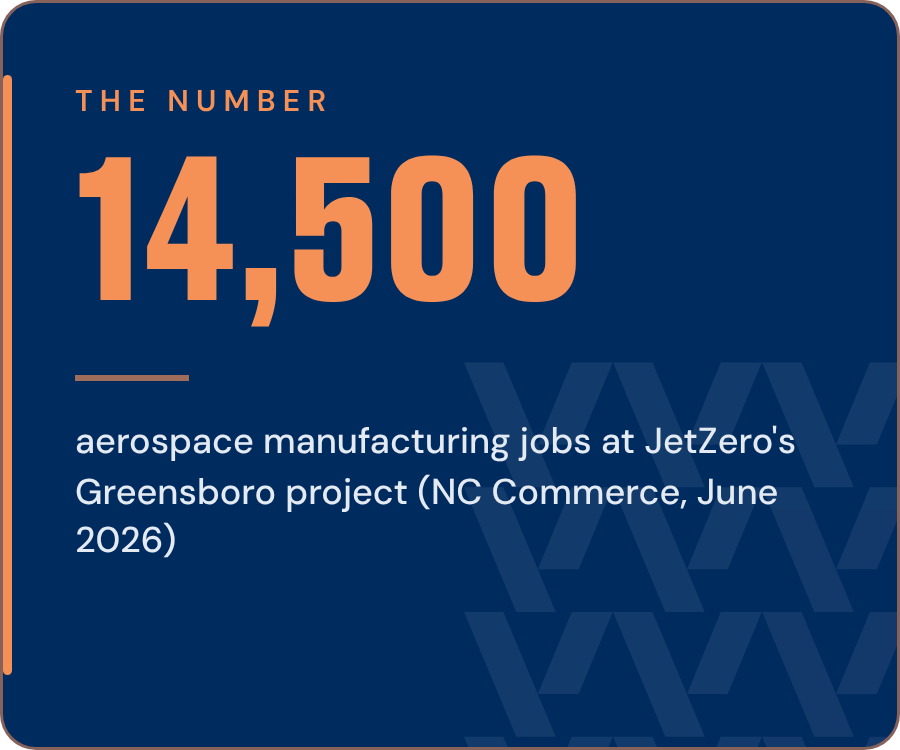
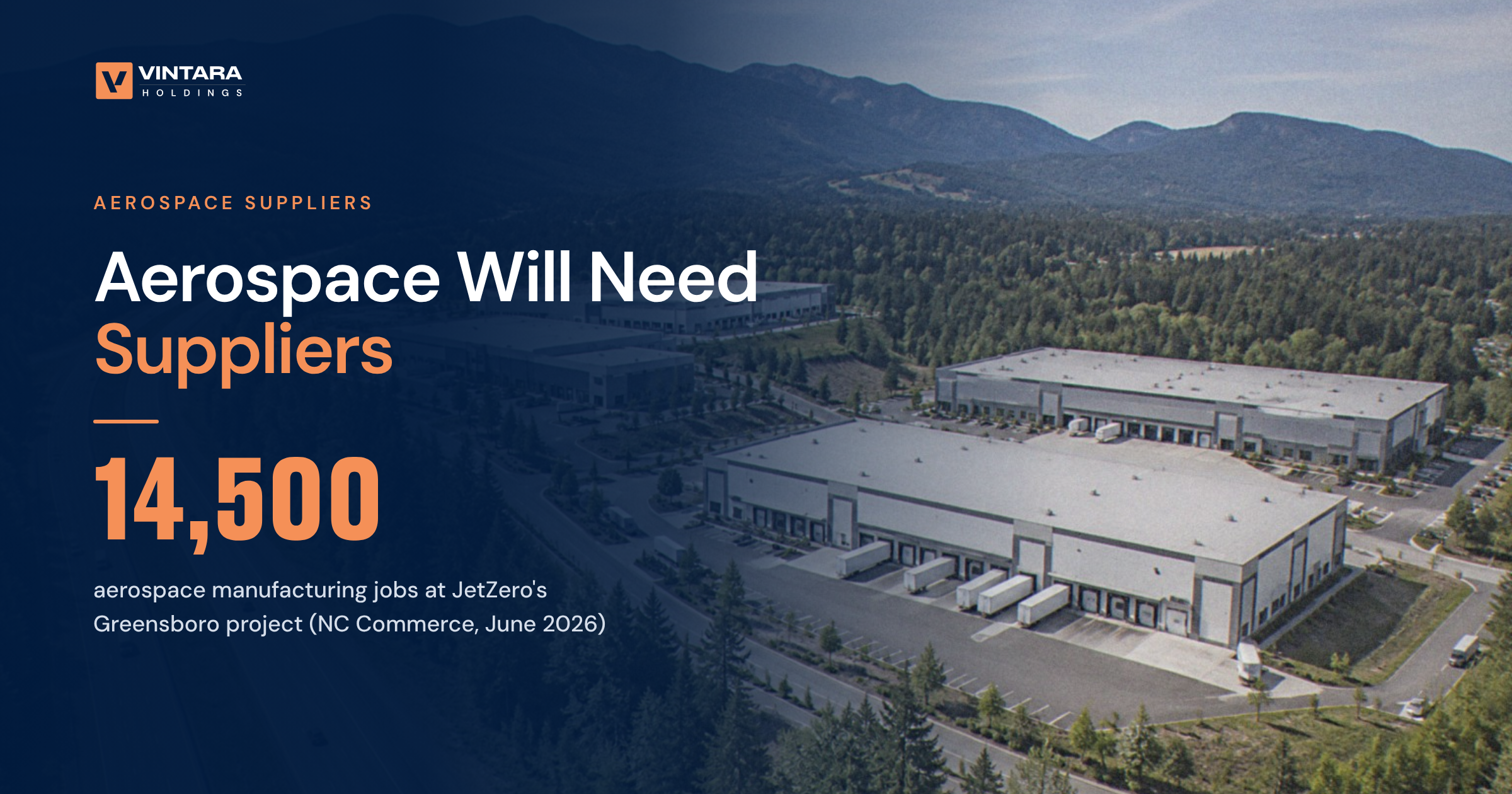
On June 15, 2026, Governor Josh Stein joined state and local officials to break ground on JetZero's first commercial airplane manufacturing facility at Piedmont Triad International Airport in Greensboro. According to the North Carolina Department of Commerce, the project will create more than 14,500 aerospace manufacturing jobs, the largest economic development project in state history based on job commitment, with more than $4.7 billion in investment.
It is not the only aerospace investment in the state this year. The same announcement notes that more than 400 aerospace companies already call North Carolina home, and that GE Aerospace said in March it would invest $160M across four North Carolina facilities. Local coverage reported that nearly $48M of that is going to GE Aerospace's Asheville operations, for precision grinding and machining equipment, inspection technology and building improvements.
Big Programs Run on Suppliers
An aircraft is not built in one building. It is built from parts, assemblies, materials and services that come from a long chain of suppliers: machined components, composites, wire harnesses, coatings, tooling, testing and more.
Where all of those suppliers will locate is not decided yet, and no one should pretend to know. Some will expand where they already operate, and some will look for a new site close enough to serve the program well. What is certain is the schedule pressure. A supplier that wins work on a new program has to be producing when the customer needs parts. That date does not move because a building permit is slow.
Aerospace adds its own layer of time. Suppliers work to strict quality standards, and parts often have to be qualified before they can ship. Every month spent waiting on a building is a month that cannot be spent on qualification, hiring and ramp up.
That is where the building decision becomes a speed decision.
The Clock on a New Building
A new industrial building typically takes 18 to 36 months from the first site visit to production. Land, design, permitting, construction and commissioning all take their turn. North Carolina is a strong place to do business, but it has been losing ground to neighboring states on how fast permits move, and a build from the ground up feels that most.
Leasing an existing building changes the clock. A manufacturer moving into an existing, powered building is typically producing in 6 to 12 months. For a supplier on a customer's timeline, that difference can decide whether the work is won at all.
What a Supplier Needs From a Building
Most suppliers to large programs are not giant companies. They need 10,000 to 100,000 square feet, not a million. What they need is the right kind of space.
Power for machining centers, furnaces, ovens and test equipment, available now rather than after a utility upgrade.
Clear height and floor strength for equipment, cranes and automation.
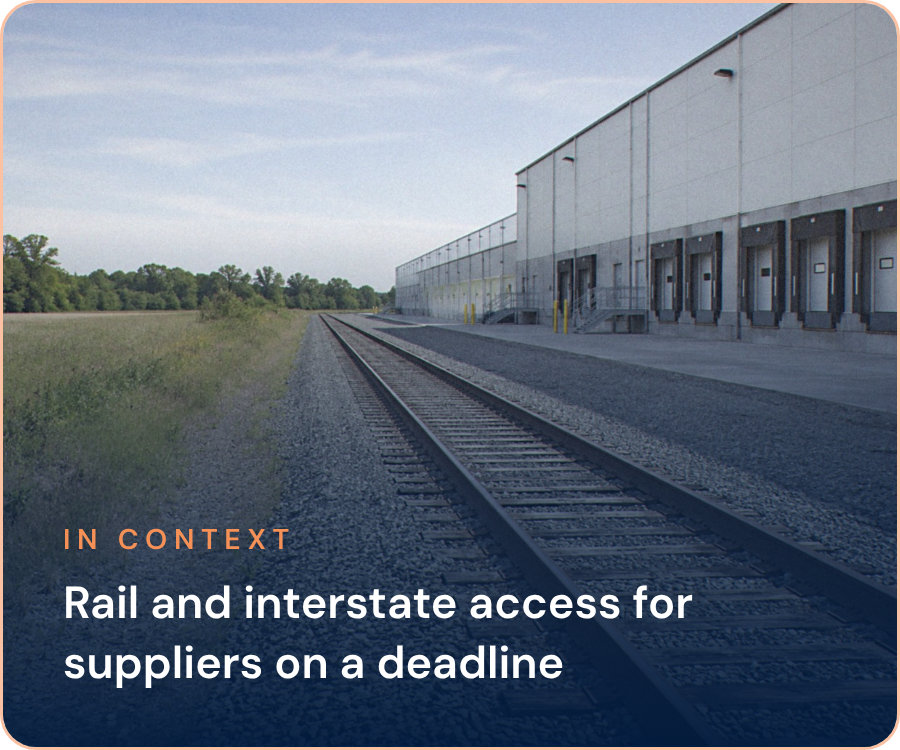
Freight access to customers and to suppliers of their own, by truck and by rail.
A workforce that already does precision work, and a college that can train more.
Western North Carolina checks those boxes in ways that are easy to overlook from a distance. The region already has a precision aerospace base, from GE Aerospace in Asheville to the companies around it. It sits on the I-26 corridor with direct access to I-40, the same interstate that runs through the Triad, and about an hour from Inland Port Greer, with overnight rail to the Port of Charleston.
For a supplier based in a higher cost state, there is a cost side too. Rent is only one line. Power, labor, taxes, insurance and freight make up the rest, and North Carolina's corporate income tax is 2.0% in 2026, the lowest of the 44 states that levy one, on its way to 0% by 2030.
Where Vintara Fits
Vintara owns and operates three industrial parks just outside Asheville, in Fletcher and Arden: about 800,000 square feet of manufacturing space in buildings from 10,000 square feet up. Quality Point offers 9MW of expandable power. SkyPoint offers 16,000 amps and rail service, and AC Industrial Park is rail served as well. Clear heights run from 25 to 40 feet depending on the building.
Cummins and Tageos are both part of the Vintara family, plus a bunch of smaller shops. A supplier moving here would be joining a community of manufacturers that already run precision operations, not starting from scratch.
Our own construction crew and 24/7 facilities staff handle the building, so a supplier can put its people on the production floor instead of on facilities work. For a company that needs something more specific, build to suit up to 300,000 square feet is an option too.
For a supplier still deciding, the useful first step is a simple one: put the customer's start date next to the time each site would take to be ready, and see which options still fit. The answer often narrows the list faster than any spreadsheet of rents.
The aircraft programs taking shape in North Carolina will be measured in decades. For the suppliers that serve them, the first milestone is much closer: being ready to make parts when the order comes.
Get a free relocation snapshot comparing your all-in cost where you operate today with Western North Carolina. To walk through it with Scott, book a time.
